

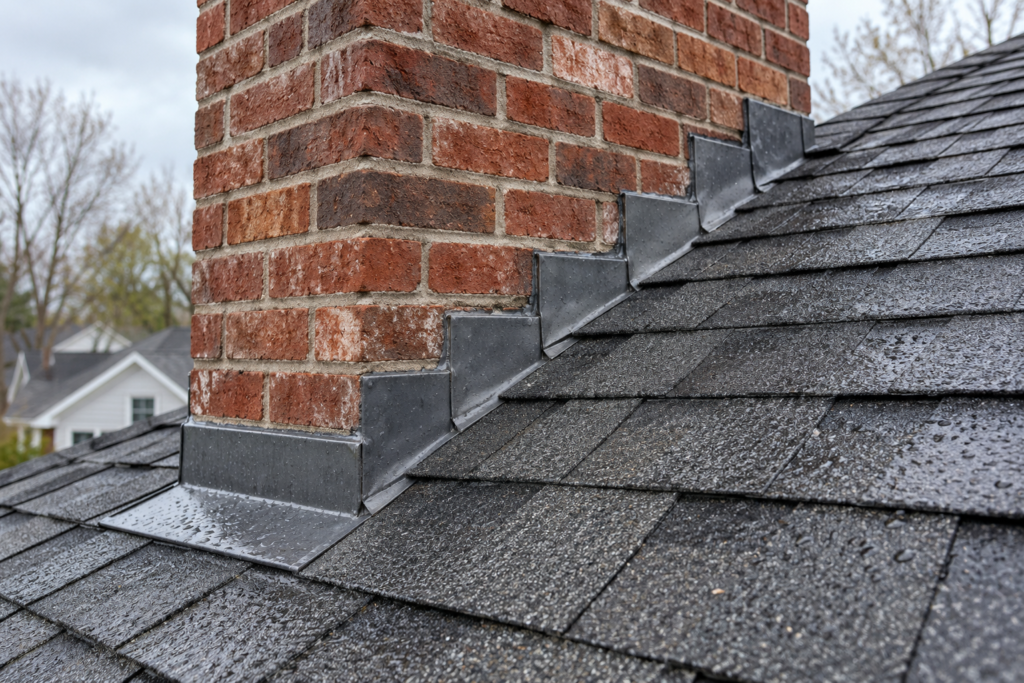
Cover image: AI-generated roofing illustration, not a photograph of a completed company project.
Roof leak causes in New Jersey range from a localized flashing defect to winter water backup. Moisture from inside the house can also create symptoms that resemble a roof leak. Before authorizing work, identify the likely pathway and the evidence supporting the proposed correction.
A ceiling stain is a symptom, not a diagnosis. Record when it appears, where it is located and whether it changes during particular conditions. A professional assessment should distinguish the observed damage from the source and explain any uncertainty before defining the repair.
1. Damaged or deteriorated roof covering
Cracked, missing or otherwise compromised shingles can interrupt the covering’s protection. GAF identifies damaged shingles among common leak causes. However, a visible defect does not by itself establish the full extent of the necessary work.
Ask whether the concern is confined to one area or appears across several sections. The contractor should explain the condition of adjacent materials and whether a defined repair can be integrated properly. A photograph of one damaged shingle should not be treated as evidence that every slope needs replacement.
Also ask what is known about the underlying assembly. The visible covering and the materials beneath it perform different roles. If concealed conditions remain uncertain, have that limitation recorded rather than assuming that new surface material alone resolves the problem.
2. Faulty flashing at transitions and penetrations
Flashing manages water where roofing meets a wall, chimney, vent or other interruption. Deterioration or an ineffective connection at these locations can admit water even when the surrounding covering appears serviceable.
The useful question is how the connection should work and what prevents it from doing so now. Ask the contractor to identify the affected transition and explain whether repair requires access to adjacent materials. A large patch of sealant is not a complete explanation of the intended water-management detail.
For recurring trouble around an addition or chimney, provide previous repair records. The new proposal should explain what it changes about the earlier approach. Repeating the same surface treatment without a diagnosis may leave the underlying problem unresolved.
3. Obstructed drainage or water backup
GAF also identifies blocked gutters as a possible contributor to water entering beneath shingles. Roof drainage deserves attention when symptoms occur near an edge or where debris collects, but the location alone is not proof of the cause.
Have the assessment distinguish an obstruction from a damaged connection or another roof-edge issue. Clearing debris and reconstructing a failed detail are different scopes. A useful proposal explains which condition was observed and which task addresses it.
Where a house has a low-slope addition, identify its drainage arrangement separately. Do not assume that the main pitched roof and the addition manage water in the same way or require the same corrective method.
4. Ice-related backup at the eaves
Winter leakage can involve an ice dam. Snow melts on a warmer roof area and the resulting water refreezes near a colder edge, creating a barrier behind which water can accumulate. The University of Minnesota Extension explains this heat-flow mechanism.
Record whether the symptom occurs during snow cover or thawing. The investigation may need to address heat escaping into the roof assembly as well as the water-entry detail. Simply replacing a visible section without examining the winter pattern can miss part of the problem.
Discuss immediate water management and longer-term correction separately. Do not climb onto a snowy roof or attempt to chip ice from roofing materials. Appropriate access and methods belong with a qualified professional.
5. Attic moisture that resembles a roof leak
Not all moisture near a roof originates outdoors. Indoor air can carry moisture into the attic, where it may condense on cold surfaces. Roof water control, air sealing and attic design therefore need to be considered together when the cause is unclear.
The US Department of Energy’s attic guidance addresses air leakage, insulation and ventilation alongside weather protection. Ask whether the observed pattern suggests exterior entry, interior moisture or more than one issue.
Replacing shingles is not a direct correction for indoor air leakage. If the findings point to an adjacent building-performance problem, clarify which qualified trade should evaluate it and how that work relates to the roofing scope.
Give the contractor a useful symptom record
| Record | Why it helps |
|---|---|
| Date and conditions | Distinguishes rain-related, winter or other recurring patterns without assuming a cause. |
| Interior location and photographs | Shows the symptom’s extent and changes over time. |
| Previous repairs or alterations | Identifies what has already been attempted and what changed recently. |
| Known roof sections and ages | Helps separate the main roof from additions or later work. |
Make observations from safe accessible locations. Avoid entering unstable spaces or approaching wet electrical equipment. Active water entry warrants prompt professional attention; an online cause list cannot establish that an area is safe.
Questions homeowners ask
Does a leak mean I need a whole new roof?
Not necessarily. A localized, repairable defect and widespread deterioration call for different decisions. Ask for evidence of the extent and an explanation of repair limitations before choosing the scope.
Can painting over a stain solve the problem?
Painting changes the appearance. First establish and address the moisture source and the condition of affected materials. Otherwise, an attractive surface can hide an unresolved issue.
Why does the leak appear only sometimes?
Different conditions can expose a defect differently, and some symptoms are seasonal. Record the pattern and let the assessment test possible explanations. Intermittent symptoms should not be dismissed simply because the area is dry during a visit.
Match the correction to the cause
A useful roofing recommendation explains the observed condition, the likely pathway and the work that will address it. That is the foundation for choosing a targeted repair or a broader replacement.
Contact American Siding & Construction about a roof leak or recurring concern. Provide the property location and symptom history to discuss the available roofing services. For scope decisions, see the repair-versus-replacement guide.