

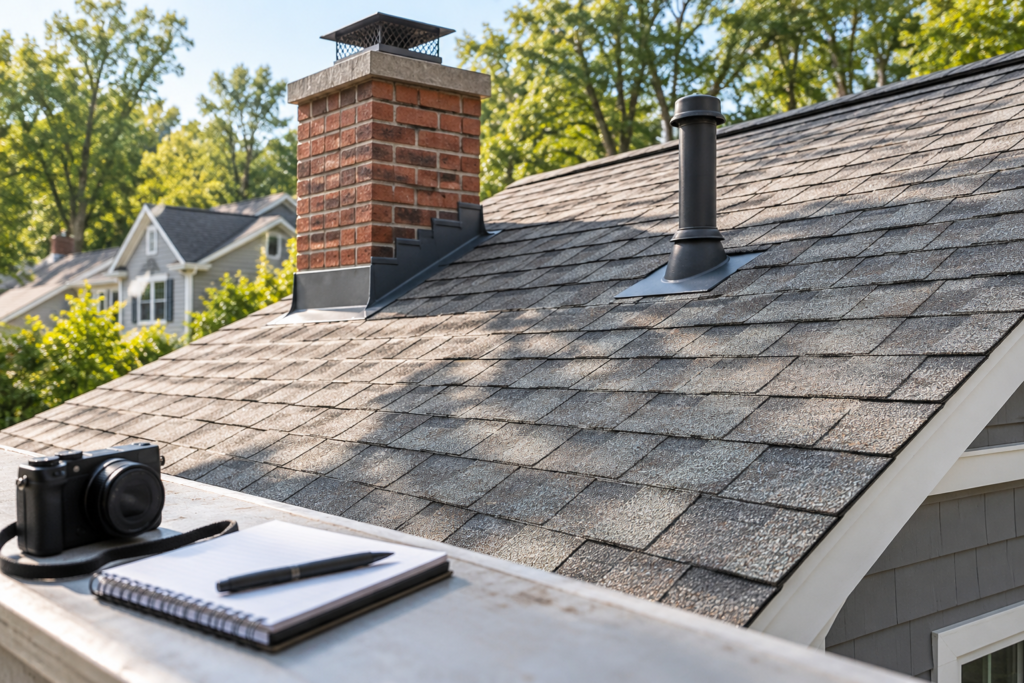
Cover image: AI-generated roofing illustration, not a photograph of a completed company project.
If you are arranging a roof inspection in New Jersey, first decide what question the visit needs to answer. Investigating an active leak, evaluating an aging roof and preparing a replacement estimate are related tasks, but they do not necessarily produce the same examination or report.
A useful roof assessment has a defined purpose, documented observations and clear limitations. Before comparing fees—or an advertised no-charge visit—ask what will be examined, what you will receive and which questions the assessment can reasonably resolve. An undefined inspection is difficult to value at any price.
Separate an assessment from an estimate
A replacement estimate prices a proposed scope. An inspection or condition assessment examines the existing roof for a stated purpose. A visit may involve both, but you should not assume that a price proposal includes a comprehensive written condition report.
Explain your objective when making the appointment. “I want to know why water appears near this window” gives the contractor a different starting point from “I want a price to replace the roof next year.” A property-purchase deadline may introduce another reporting requirement that should be discussed in advance.
Ask whether the provider offers the specific service and document you need. Do not assume that every roofing contractor provides independent transaction reports, specialized moisture testing or engineering opinions.
What should the scope address?
The appropriate scope depends on the property and the question. For a roofing condition discussion, ask which visible coverings, transitions, penetrations and drainage details will be examined. Where relevant and accessible, interior or attic observations may add context.
GAF’s roof-damage guidance recognizes that roofing problems can involve components beyond the visible shingles. A useful assessment therefore connects the observed symptom to the areas that need investigation, rather than assuming that one discolored ceiling identifies the entry point.
| Your question | Deliverable to discuss |
|---|---|
| Why is water appearing indoors? | Observed conditions, possible pathways, unresolved alternatives and any recommended next investigation. |
| Can a localized defect be repaired? | The proposed repair boundary, condition of surrounding materials and limitations of that approach. |
| Should I plan for replacement? | Condition findings, extent of deterioration and the reasons for the recommended scope. |
| What information does a buyer or manager need? | The agreed report format and whether it meets that recipient’s stated purpose. |
Confirm whether photographs and written findings are included. Pictures are most useful when they identify location, explain the observation and distinguish a defect from a normal feature. An unexplained collection of close-ups can create concern without helping you make a decision.
Understand what the visit cannot establish
Roof access, covering materials and concealed construction limit what can be observed. Ask the provider to state inaccessible areas and the method used. A ground-level view, camera survey and direct roof examination should not be presented as identical investigations.
A non-invasive assessment generally does not expose every concealed layer. If the suspected problem requires further investigation, ask what additional step is proposed, why it is useful and what permission is needed. Do not interpret “no visible defect found” as a guarantee that no concealed problem exists.
Likewise, a roof assessment should not assign an exact remaining life without a defensible basis. Condition evidence can support planning and prioritization, but it cannot make future weather, workmanship performance and hidden deterioration fully predictable.
What determines roof inspection cost in NJ?
Compare the work being purchased rather than searching for a single statewide fee. The purpose, building size, access constraints, documentation and any specialist investigation can all change the scope. Ask the provider to distinguish the assessment fee from optional testing, repairs or later estimates.
A public “free estimate” offer does not automatically include every inspection deliverable. Conversely, a paid report is not automatically more useful if its scope does not answer your question. Value comes from relevant evidence and a usable conclusion.
Request a written description before authorizing the visit. It should identify the fee where applicable, included observations, expected documentation and important exclusions. This guide does not quote an American Siding & Construction inspection price or a verified New Jersey market average.
Prepare information that improves the assessment
Collect available installation records, previous repair descriptions and dated photographs of interior symptoms. Note when the problem appeared and whether it seems associated with particular conditions. Record observations without trying to prove a cause yourself.
From the ground, you can photograph visible changes using a safe viewing position. Inside, document stains or other symptoms without entering unstable or inaccessible spaces. Do not climb onto the roof to create a more complete photo set for the contractor.
Provide access arrangements and describe any known restrictions. For commercial or multifamily properties, identify the person who can authorize access and explain tenant or operational constraints. A missed access requirement can undermine an otherwise well-planned visit.
Evaluate the recommendation
A strong recommendation separates observation from interpretation. It should explain what was seen, what that finding suggests and what work or further investigation follows. Ask for clarification if every minor condition leads directly to a complete replacement recommendation.
There are legitimate reasons to recommend replacement, but those reasons should be documented. Similarly, a small repair should have a defined purpose and limitations. The best outcome is an appropriate scope, not necessarily the largest or smallest project.
Questions property owners ask
Should I obtain another opinion?
Consider one when the findings do not explain the recommendation, the proposed work is substantial or important uncertainty remains. Share the same history and questions so the assessments address comparable issues.
Can an inspection guarantee that the roof will not leak?
No assessment should be treated as an unlimited prediction. Review its stated scope, access limitations and conclusions, and clarify any separate written commitments.
Is a roof inspection the same as a whole-building inspection?
No. Confirm the provider’s scope and qualifications for the actual assignment. A roofing assessment should not be assumed to resolve unrelated structural, electrical or other building questions.
Buy an answer to the right question
Define the decision first, then agree on the observations and documentation needed to support it. That approach makes an inspection easier to evaluate and any resulting proposal easier to understand.
Contact American Siding & Construction about your roofing concern. Describe the property, visible symptoms and the decision you need to make, and ask what assessment is appropriate for the company’s roofing repair or replacement services.