

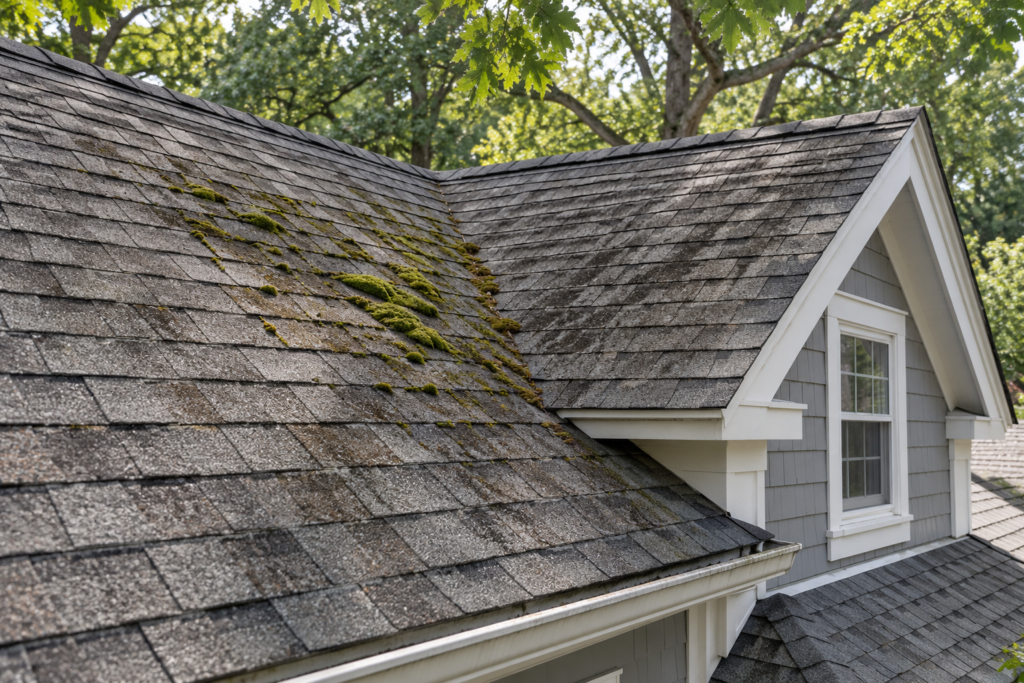
Cover image: AI-generated roofing illustration, not a photograph of a completed company project.
Moss and algae on a New Jersey roof can create different concerns, even when both make the covering look older. Dark streaks are not the same as raised growth, and neither should be diagnosed from a distant photograph alone. Identify what is present and the condition of the roofing before selecting a treatment or accepting a replacement recommendation.
Discoloration alone does not establish that a roof has failed. The appropriate response depends on whether the issue is primarily cosmetic, whether growth is affecting the covering and whether separate deterioration or leakage is present.
Distinguish a stain from raised growth
ARMA’s algae-discoloration bulletin describes algae staining on asphalt roofing and explains that it should not be confused with moss. Dark streaking may be an appearance concern, while raised growth warrants a different assessment of the surface and moisture conditions.
Owens Corning’s technical guidance also distinguishes algae from moss and discusses product-specific algae resistance. Avoid treating every dark area, green patch or surface mark as the same organism or defect.
From a safe ground-level position, record where the appearance changes occur and whether they seem flat or raised. A professional can assess the covering more closely using an appropriate access method. Do not scrape the surface yourself to identify it.
Look at the roofing condition separately
Ask whether the shingles and adjacent details remain serviceable. The assessment should distinguish the appearance concern from cracking, displacement, deterioration or other conditions that may need roofing work.
If water has appeared inside, report that separately. A visible patch of growth should not be assumed to explain a leak without investigation. Conversely, an attractive-looking slope does not prove that its flashings and concealed details are sound.
Request photographs that show both a close view and the location on the roof. This helps you understand whether the proposed work addresses a small area, several sections or a broader condition.
Use a method approved for the actual covering
Cleaning instructions should come from the applicable roofing manufacturer. ARMA cautions against damaging cleaning methods and emphasizes appropriate professional procedures. Aggressive washing or abrasion can harm the shingle surface; an impressive before-and-after photograph does not prove that the method was suitable.
Before hiring a cleaning provider, ask for the proposed method in writing and how it complies with the selected product’s guidance. Clarify how the surrounding property will be protected and how runoff will be managed. Avoid accepting a generic “safe for all roofs” statement as a substitute for that explanation.
Do not apply a chemical recipe from an unrelated product’s instructions. Roofing materials, adjacent finishes and site conditions differ. This is a specification question for the provider, not a reason to experiment on the roof.
Understand what cleaning does not repair
Cleaning may address appearance or growth, but it does not rebuild a deteriorated shingle or correct a faulty flashing connection. If the assessment identifies a separate defect, that work needs its own defined scope.
| Finding | Appropriate discussion |
|---|---|
| Staining with otherwise serviceable covering | Whether treatment is worthwhile and which manufacturer-approved method is appropriate. |
| Raised growth with uncertain surface condition | Professional assessment of the growth and the covering before selecting a treatment. |
| Localized roofing defect | A defined repair, separate from any cleaning proposal. |
| Widespread deterioration | Evidence supporting a broader roofing decision rather than a cosmetic treatment. |
This separation protects both the roof and the budget. It avoids replacing a serviceable roof solely for an appearance issue and avoids spending on a cleaning treatment when the underlying roofing needs different work.
Consider the site without promising a permanent cure
Record debris accumulation, surrounding vegetation and areas that stay shaded. Those observations can help a professional discuss recurring conditions. Where tree work is considered, use an appropriate tree-care professional rather than treating the roofing visit as authorization to remove vegetation.
For a future roof replacement, compare the exact product’s algae-resistance provisions if appearance is a priority. Resistance should not be described as immunity to every type of growth. Read the written terms and distinguish appearance protection from other roofing warranties.
Ask what follow-up observation is appropriate after treatment. Avoid promises that one cleaning will permanently prevent recurrence under all site conditions. Keep the product and method information with the roof’s records.
Questions homeowners ask
Does every roof slope need the same treatment?
Not necessarily. Ask the provider to map the observed conditions and explain the proposed treatment boundary. A whole-roof proposal should have a reason beyond convenience.
Should I clean the roof before a condition assessment?
If you are concerned about deterioration or leakage, discuss the assessment first. Document the existing appearance so the professional has a useful record before a treatment changes the surface.
What if I do not know the shingle manufacturer?
Check installation records and ask the assessing professional what can be identified. Do not substitute a generic treatment merely because the product is uncertain; resolve the method’s suitability before authorizing it.
Choose the response that matches the finding
Begin with identification and condition, then separate any appearance treatment from necessary roofing work. The best decision preserves a serviceable covering while addressing defects that affect performance.
If discoloration is accompanied by deterioration or a roofing concern, contact American Siding & Construction to discuss the roof. Share photographs taken safely and any leak history to ask about appropriate repair or replacement options.