

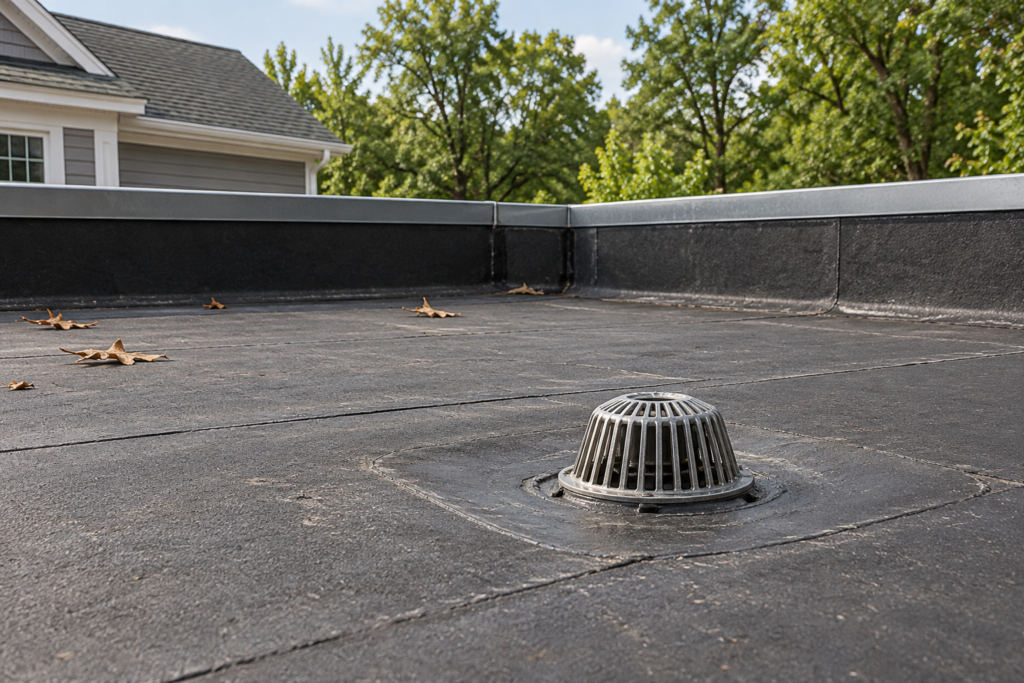
Cover image: AI-generated roofing illustration, not a photograph of a completed company project.
Roof maintenance cost in New Jersey is meaningful only when the proposed work is defined. A visual condition visit, drain clearing, leak investigation and a permanent repair are different services. Combining them under one vague “maintenance” price makes it difficult to compare proposals or understand what the building actually receives.
Separate routine observation and care from investigation and corrective work. Then compare the access requirements, documented tasks and reporting included in each proposal. A good maintenance plan helps preserve serviceable roofing and identify developing problems; it should not assume that every visit leads to replacement.
Build the scope before building the budget
Start with an inventory of the roof sections, known materials, drainage features, rooftop equipment and previous problems. A building with several additions may have more than one roof form or covering. Each section needs an appropriate scope rather than a single generic checklist.
Ask prospective providers to separate the following categories:
- Observation and reporting: accessible areas examined, photographs and condition notes.
- Defined routine tasks: specific debris or drainage work that is actually included.
- Diagnostic investigation: additional work needed to understand a leak or concealed concern.
- Repairs: corrective work with a described location, material and purpose.
- Specialist services: tasks that require a different trade or separately agreed method.
This separation makes approvals clearer. The owner can authorize a routine visit without assuming that unspecified repairs are included, and the contractor can explain a newly discovered condition before expanding the work.
Flat and pitched roofs need different attention
A roof’s shape influences water movement and access, but shape alone does not identify the material. A commercial building can have steep-slope roofing, and a house can include a low-slope section. Identify the assembly before choosing the maintenance method.
| Roof area | Issues to address in the scope |
|---|---|
| Steep-slope shingle covering | Visible covering changes, transitions, penetrations and debris accumulation; use methods suitable for the actual shingles. |
| Low-slope membrane | Seams and details, drainage paths, equipment-related exposure and the effects of roof traffic. |
| Edges, walls and roof intersections | Condition of the connections between materials and any recurring water-entry history. |
| Equipment service areas | Access routes, work by other trades and new damage or altered details after service visits. |
A low-slope roof often requires deliberate coordination around drains and equipment. A steep roof creates different access and work-planning constraints. Neither should be labeled automatically cheaper to maintain without considering its actual size, layout and condition.
Follow the installed system’s maintenance guidance
Use the roof’s product and warranty documents to establish appropriate care. For example, Carlisle’s care and maintenance guide recommends inspections at least every six months and additional checks following relevant events or rooftop work. That is manufacturer guidance for the systems it addresses, not a universal legal interval for every New Jersey roof.
Ask the provider to explain the proposed frequency using your installed system, site conditions and history. A recurring problem may justify closer follow-up. A generic calendar alone does not establish which tasks are needed or whether the original cause has been corrected.
Keep the maintenance document with the roof records. If the covering or equipment changes, review whether the maintenance scope should change too. A checklist written before a major rooftop alteration may no longer describe the current assembly.
What changes the price?
Access and working conditions
Roof height, safe access, occupancy and restricted work areas affect how a visit is organized. Tell the contractor about tenant access, loading areas, business hours and any site procedures before requesting a price.
Roof layout and details
Several roof sections, numerous penetrations or complicated drainage routes require a different scope from a simple unobstructed area. Roof square footage is useful, but it is not a complete description of the work.
Existing condition and unresolved history
Routine care on a documented, serviceable roof differs from investigating years of intermittent leakage. Share previous repair records so the provider does not have to reconstruct the history from symptoms alone.
Reporting and authorization requirements
A property manager may need photographs by roof zone, a prioritized action list and a report suitable for an owner review. Define that deliverable in advance. It is reasonable to compare prices only after the reporting expectations match.
No single statewide maintenance price reliably captures these variables. Ask for the visit scope and proposed corrective work separately. This article does not present a company price list or an unsupported cost-per-square-foot allowance.
Manage roof traffic as part of the plan
For commercial properties, roofing care is partly a coordination problem. HVAC technicians and other trades may need roof access even when no roofing work is scheduled. Record who visited, where they worked and whether any roof details were changed.
Explain approved routes and protection requirements using the installed system’s guidance. Do not assume that a convenient path across the roof is suitable for repeated traffic. Have unfamiliar materials, spills or altered details evaluated using the appropriate product instructions.
A short access log can be useful when a new symptom appears. It does not establish fault by itself, but it helps the investigating contractor understand what changed and where to look.
Use the report to prioritize work
Ask for findings to be grouped by required action: conditions needing prompt attention, work that can be planned and observations to monitor. Each recommendation should identify the location and explain the consequence of leaving the condition unresolved.
Distinguish a cosmetic change from deterioration that affects performance. Cleaning should not be presented as a structural repair, and routine sealant application should not substitute for understanding why a detail repeatedly leaks.
When replacement is recommended, request the evidence connecting that recommendation to the overall roof condition. Maintenance can help manage a serviceable system, but a recurring program should not conceal the fact that a broader renewal plan is needed.
Questions owners and managers ask
Can maintenance guarantee a longer roof life?
It should not be sold as a fixed extension of service life without support. Appropriate care and timely correction can address avoidable problems, but the result depends on the existing roof and the conditions it faces.
Should every maintenance visit include a coating?
No. A coating is a distinct specification decision requiring a suitable substrate, compatible products and a defined purpose. It should not be assumed to be a routine treatment for every roofing material.
What records should I keep?
Retain installation information, warranty documents, dated reports, photographs and descriptions of repairs or alterations. Organize them by roof section where a building has several systems.
Spend on defined work and usable information
A useful maintenance budget supports actual tasks, reliable reporting and appropriate repairs. Compare those deliverables before comparing totals, and use the findings to plan replacement only when the condition supports it.
Contact American Siding & Construction about your property’s roofing needs. Include the building type, roof information and recurring concerns to discuss appropriate roofing repair or replacement work and the scope available for your project.