

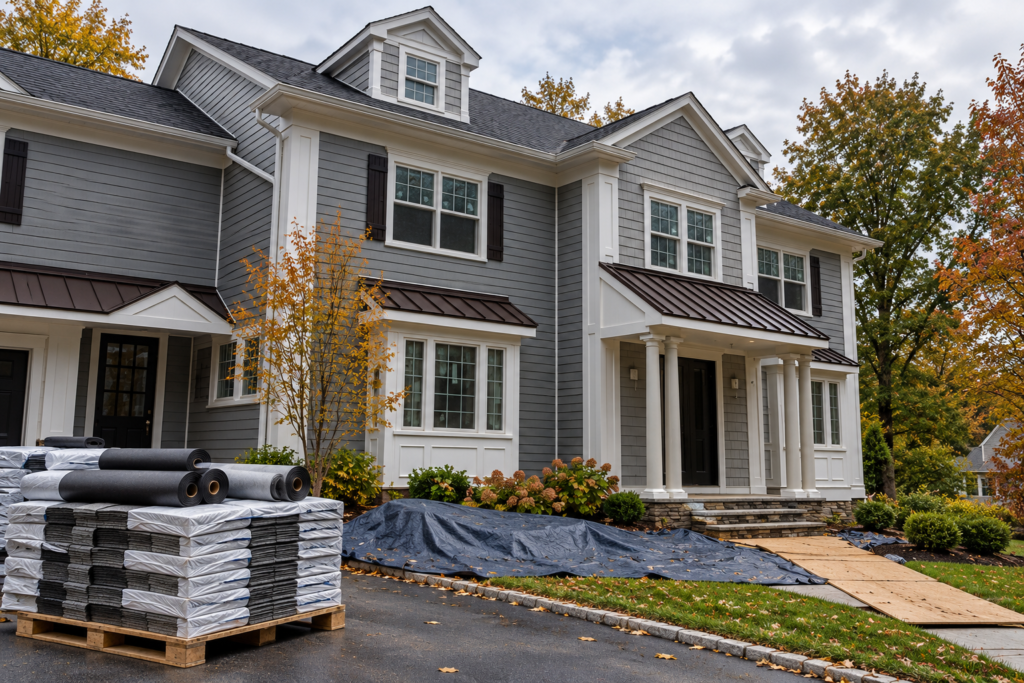
Cover image: AI-generated roofing illustration, not a photograph of a completed company project.
The best time to replace a roof in New Jersey is a workable installation window that fits the roof’s condition, the selected materials and a properly prepared project. Choosing a month is only one part of that decision. An actively leaking roof may need attention before a preferred season, while a serviceable roof gives you more time to compare scopes and coordinate the work.
Plan around condition, suitable weather and project readiness—not a guaranteed “best month.” Ask the contractor to separate booking lead time, installation duration and closeout. Those are different parts of the schedule, and a short installation estimate does not mean work can begin immediately.
Start with urgency rather than the calendar
If water is entering the building, describe the active problem when you contact a roofer. A contractor can assess the appropriate next step without assuming that full replacement is the only response. Do not wait several months for a preferred season merely because a generic article recommends it.
For planned replacement, gather the roof history, known repairs and any recurring symptoms. Explain upcoming travel, renovations or property-use constraints early. A useful schedule accommodates those facts instead of starting with an arbitrary completion date.
Roof condition can also affect the scope. A straightforward covering replacement and a project with unresolved deck concerns should not be scheduled as if their uncertainties were identical. Ask which findings could change the plan after removal begins.
Understand the seasonal tradeoffs
New Jersey’s weather varies across the state. Rutgers’ climate overview describes meaningful coastal and inland differences. A coastal property and a higher inland location should not be assigned the same weather assumptions simply because both are in New Jersey.
| Seasonal consideration | Question for the contractor |
|---|---|
| Spring precipitation and variable conditions | How will the start window and temporary protection be managed if the forecast changes? |
| Summer heat and sun exposure | How will product handling, site access and daily work be organized for actual conditions? |
| Autumn scheduling | What is the current lead time, and which prerequisites must be complete before a slot is confirmed? |
| Winter temperatures and short workdays | What do the selected product instructions require, and is the proposed window suitable? |
These are planning questions, not claims that one season always produces a lower price or a better roof. Ask for the contractor’s current availability and project-specific approach. Neither a seasonal discount nor immediate capacity should be assumed.
Can asphalt shingles be installed in cold weather?
Cold-weather installation requires attention to the product and conditions. ARMA’s cold-weather guidance explains that shingle sealing can be delayed and that handling and sealing procedures should follow manufacturer instructions. GAF also publishes product-related hand-sealing guidance.
Ask how those instructions affect your selected shingle and forecast. Do not reduce the decision to a universal outdoor temperature copied from another product’s literature. The contractor should explain any additional procedures and whether the anticipated conditions support the planned work.
Installation suitability and household convenience may point in different directions. A date that fits your calendar is not enough reason to proceed in unsuitable conditions. Establish how a postponement will be communicated and how a revised window will be selected.
How long does roof replacement take?
A credible duration estimate follows the actual scope. Roof area, access, geometry, tear-off requirements, penetrations and concealed conditions all influence the work plan. A neighbor’s installation time is useful context only if the projects are genuinely comparable.
Ask the contractor to explain three separate periods:
- Preconstruction: final scope, material selection, ordering, required approvals and scheduling.
- On-site work: setup, removal where specified, substrate work, installation and daily protection.
- Closeout: final cleanup, agreed review, documentation and any required inspection coordination.
Have the proposal identify its scheduling assumptions. For example, an estimate based on a sound deck should explain how newly discovered deterioration would be documented and addressed. A range with clear assumptions is more useful than a confident completion promise unsupported by a work plan.
Ask what “complete” means. Materials installed, debris removed, paperwork delivered and remaining details resolved are different milestones. Agreeing on them prevents a small unfinished item from becoming an extended communication problem.
Prepare the property before the crew arrives
Agree on access and material placement
Identify where vehicles, delivered materials and waste containers may be placed. Tell the contractor about restricted driveways, shared access or areas that must remain usable. Move your vehicles and belongings as agreed before the scheduled arrival.
Discuss protection and household routines
Walk through landscaping, outdoor furniture, wall-mounted items and other vulnerable areas with the contractor. Clarify the protection included in the scope and any preparation assigned to you. Plan for noise and discuss pets, children and people who need predictable access to the building.
If attic access is required, arrange a clear route and ask what stored belongings should be moved or covered. Avoid assuming that the crew can safely work around every item already in the space.
Coordinate roof-mounted features
Flag antennas, solar equipment, skylights and other roof-related features before the start date. Establish which trade is responsible for any necessary removal, reconnection or specialist work. Discovering a missing coordination task on installation morning can disrupt an otherwise reasonable schedule.
Set a communication process
Choose the primary contact and the method for discussing discoveries or scope changes. Agree on how photographs and revised work descriptions will be shared. The person authorized to approve a change should be reachable while consequential decisions are being made.
Questions homeowners ask
Should I postpone replacement until fall?
Only if the roof’s condition and your project plan support waiting. Have unresolved leakage or deterioration assessed first. A preferred season is not a substitute for understanding the current problem.
Does a weather delay mean the project was poorly planned?
Not necessarily. The relevant question is whether the contractor anticipated weather uncertainty, explained protection measures and communicated the change. Proceeding merely to preserve a date can be the less responsible choice.
Can I stay home during the work?
Discuss access, noise and household needs with the contractor. There is no single answer for every property or occupant. Arrange any accommodation you need based on the actual work plan.
Use the schedule to prepare a better project
A good roofing schedule explains prerequisites, installation assumptions, weather decisions and closeout responsibilities. It gives you a practical plan without pretending that every variable is controllable.
Contact American Siding & Construction about an upcoming roof replacement. Share the property location, known condition and preferred timeframe to begin a discussion about the appropriate roofing scope and scheduling requirements.