

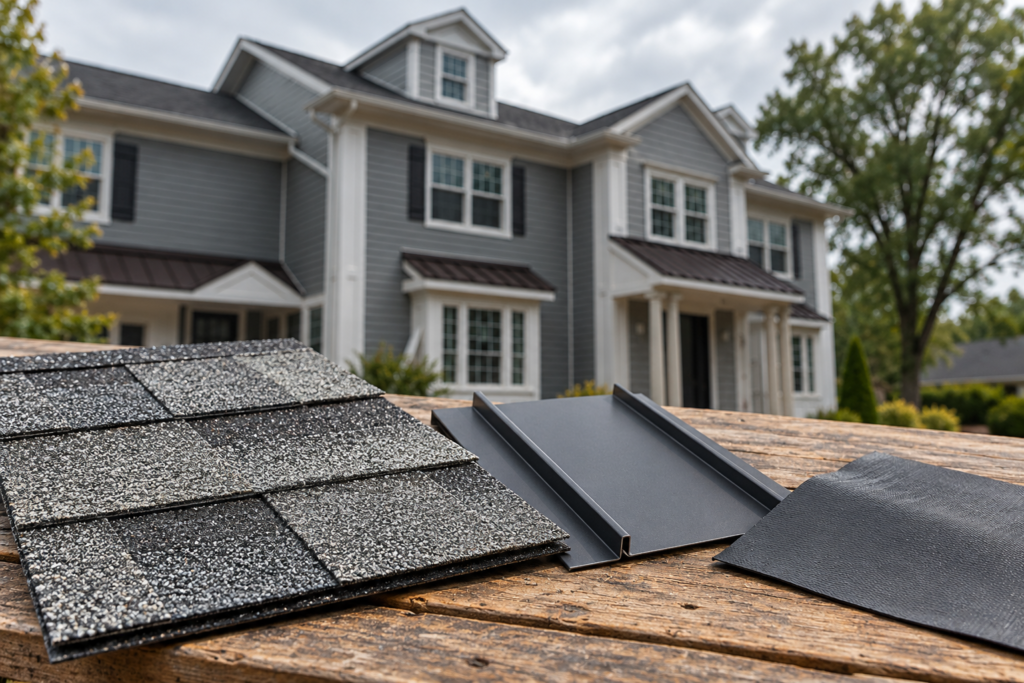
Cover image: AI-generated roofing illustration, not a photograph of a completed company project.
The best roofing materials for New Jersey homes are the ones that suit the roof’s slope, existing structure, exposure and owner’s priorities. A material can look excellent on a sample board and still be the wrong choice for a particular roof section.
Begin with technical suitability, then compare appearance, installation scope and ownership costs. This approach helps you narrow the options without treating a premium price or a long warranty headline as proof of a better result.
The short answer: shortlist systems, not just surface materials
Architectural asphalt shingles are a reasonable option to investigate for many suitable pitched roofs. Standing-seam metal, specialty coverings and low-slope membranes belong in the comparison where the building and project requirements support them. No single material is best for every New Jersey home.
Ask a roofing professional to identify the roof sections and permitted applications before selecting a product. A main roof and a shallow porch may need different assemblies. Confirm material availability and relevant installation capability for the options on your shortlist.
First filter: what can your roof actually accept?
Have the roof slope measured rather than judged from a street photograph. Product instructions establish limits and details for installation. For example, GAF’s slope guidance distinguishes suitable shingle applications and additional requirements at lower slopes. Do not assume a shingle designed for one condition can simply be extended onto every adjacent surface.
Also identify the deck, existing coverings and any proposed change in material. Ask whether structural review is needed for the new assembly. If the roof has irregularities or suspected deterioration, address those findings before selecting an upgraded finish.
Keep the connection details in the shortlist. Walls, valleys, chimneys and adjoining roof systems can influence the design and installation effort. A suitable field material still needs suitable transitions.
Asphalt shingles: compare exact products and the complete installation
Asphalt shingles include flatter three-tab designs, dimensional architectural shingles and more elaborate designer profiles. GAF’s shingle-selection resources explain differences among product options. Appearance, documented performance and warranty eligibility should be checked for the specific line.
For a homeowner who prefers a dimensional roof, ask to see full-size samples and completed installations using the proposed color. Review how the profile works with the home’s siding, brick and trim. A small screen image can make texture and contrast difficult to judge.
Then compare the installed assembly: removal, deck preparation, underlayment, specified accessories, flashing and attic review. Choosing an upgraded shingle should not leave those less visible items undefined.
Metal: specify the panel, substrate and details
“Metal roofing” describes a broad family, not a single product. Ask for the panel profile, base metal, coating, attachment and accessory details. Standing-seam and exposed-fastener systems should not be treated as equivalent proposals.
Coastal exposure deserves particular care. Sheffield Metals’ material comparison explains why substrate selection matters around saltwater environments. Get the selected product’s exposure limits and written warranty restrictions before deciding that a material is appropriate near the shore.
Also discuss the appearance of long panels, visible details and how future rooftop accessories would be attached. Compare actual project requirements rather than assuming that every metal roof is maintenance-free or delivers the same service life.
Slate and other specialty coverings: investigate suitability and repair first
A distinctive roof can be part of a home’s architectural character. If an existing slate roof has problems, obtain a knowledgeable condition assessment before assuming wholesale replacement is necessary. National Park Service guidance stresses understanding the existing slate and the implications of replacement materials.
For slate, tile, wood or composite products, ask for product-specific requirements, maintenance expectations and appropriate installer experience. If you are considering a different material, review its effect on the roof assembly and appearance. Confirm any association or preservation review relevant to the property.
A material that imitates another material’s appearance does not automatically share its performance. Compare the proposed product’s own documentation and the complete installed scope.
Low-slope roof sections need their own selection process
Low-slope additions, porches and other shallow sections should be identified separately from the main pitched roof. Membrane and asphaltic systems may be relevant, but the choice needs to reflect the assembly, drainage and exposure.
Carlisle’s building-owner resources illustrate several low-slope material families. Use that information to ask which system suits the section and how it connects to surrounding work. Do not select a membrane solely because its color matches another roof surface.
Compare the shortlist against your priorities
| Priority | Question to resolve |
|---|---|
| Architectural appearance | How will the profile and color look across the whole exterior in daylight? |
| Exposure | Does the exact product suit the site’s wind, moisture, shade and coastal conditions? |
| Installation quality | Who will install it, and how are difficult transitions specified? |
| Ownership cost | What maintenance, access and future work should be planned? |
| Written protection | Which product and workmanship terms apply to this assembly? |
| Project feasibility | Are suitable products, installation capability and required approvals available? |
Rank the priorities before looking at upgrades. An owner restoring an architectural feature may make a different choice from an owner concentrating on a straightforward replacement. Neither decision should depend on an unsupported claim that one product is always the best value.
Energy efficiency: consider the whole building
Reflective roofing can reduce solar heat absorption, but a cooler roof surface does not establish a particular reduction in your household bill. The US Department of Energy’s cool-roof guide notes that climate and winter heating tradeoffs affect the result.
Ask how the proposed roof interacts with insulation, air leakage, ventilation and the building’s heating and cooling needs. New Jersey has varied inland and coastal conditions, as described by Rutgers’ climate overview. Use a property-specific assessment rather than a generic energy-savings percentage.
Color and resale: make a design choice without a false return promise
View samples beside the materials that will remain, especially masonry and siding. Compare them outdoors in more than one lighting condition. Ask whether roof sections facing different directions will appear different because of light and shadow.
A coherent exterior can support the home’s appearance, but this guide does not assign a resale-value increase to a roof color. Choose a combination you can justify through design compatibility and product suitability, not an invented percentage return.
Frequently asked questions
Does the longest warranty identify the best material?
No. Read coverage, exclusions and eligibility alongside the product specification. Warranty duration is not a direct prediction of service life.
Can one material cover every part of the house?
Sometimes, but roof sections must be evaluated individually. Slope changes and transitions can require different assemblies.
Should a healthy roof be replaced only for a new color?
That is an appearance-driven renovation decision. Evaluate the existing condition, cost and opportunity to coordinate other work before proceeding.
Choose the assembly before the upgrade
A practical shortlist connects the roof’s requirements with your design and ownership priorities. The best proposal explains both the material choice and the details needed to install it successfully.
Contact American Siding & Construction to discuss roofing options for your New Jersey property. Share the town, roof type if known and your priorities; confirm which materials and services are suitable and available for the project.